
Storm Damage Roofing &
Insurance Claim Experts
Insurance companies have adjusters working for them. You should have an expert working for you. We document damage correctly, fight low-ball estimates, and get your claim paid at full value.
What We Handle
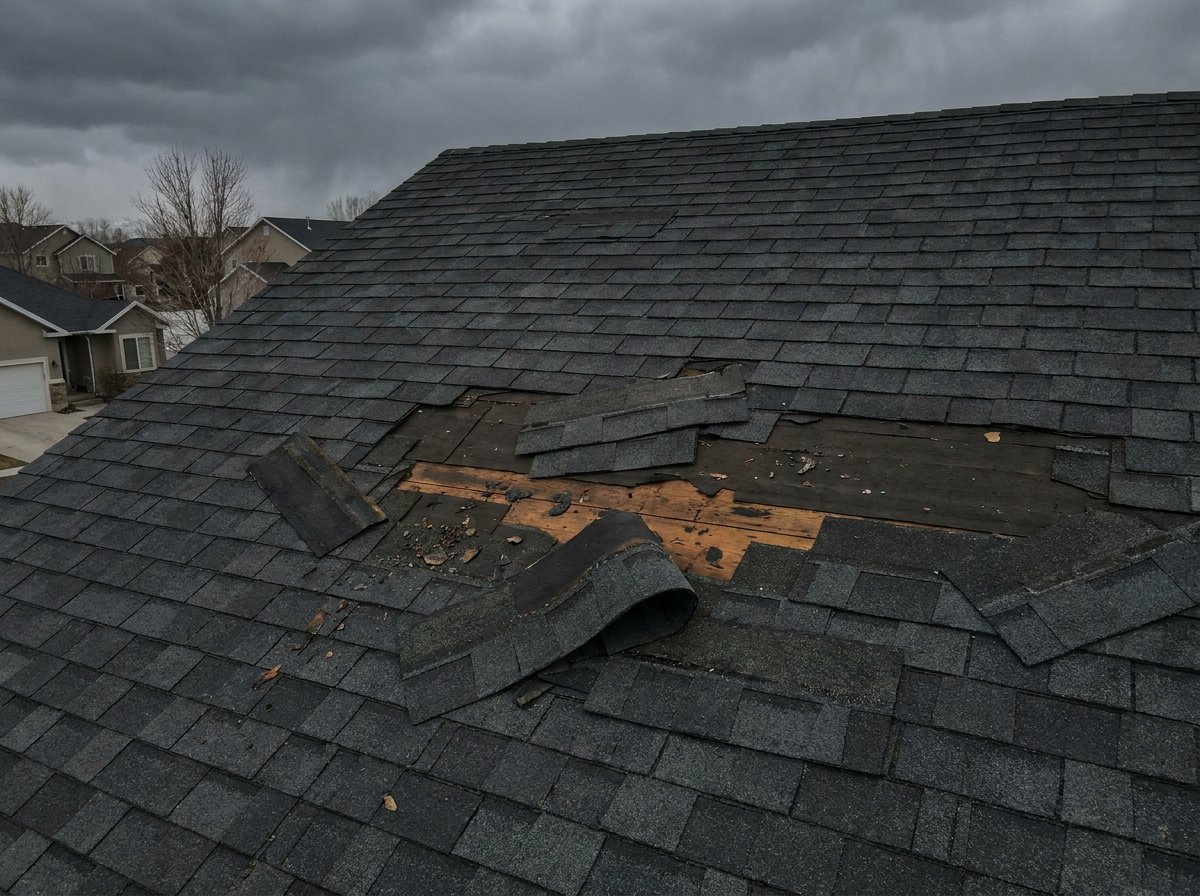
Storm Damage Roofing
- Hail damage inspection & documentation
- Wind damage assessment
- Water intrusion and leak investigation
- Full roof replacement when warranted
- Emergency tarping and temporary repairs
- Flat, pitched, and commercial roofs
Insurance Claim Advocacy
- Claim filing from day one
- Adjuster meeting support
- Scope of loss documentation
- Supplement negotiation
- Denial appeals and re-inspection requests
- Contractor sign-off on repair scope
General Storm Damage Restoration
- Siding damage from hail and wind
- Window and trim damage
- Gutter and soffit/fascia damage
- Interior water damage documentation
- Full property damage assessments
- Structural damage identification
How to File a Storm Damage Insurance Claim
Most homeowners leave money on the table. Here's how to do it right — and when to call us first.
Get a Professional Inspection Before You Call Insurance
Call us first. We document damage with photos, measurements, and written notes before anything is disturbed. This gives you a strong, independent record of the damage — not just what the insurance adjuster decides to write down.
Pro tip: The insurance company's adjuster works for them, not for you. Having your own documentation changes the negotiation entirely.
Review Your Policy
Know what you have: What's your deductible? Do you have ACV (Actual Cash Value) or RCV (Replacement Cost Value) coverage? Is there a separate wind/hail deductible? Do you have code upgrade coverage? These details matter enormously.
Pro tip: RCV policies pay for full replacement at current costs. ACV policies depreciate your payout. If you have ACV, you may be significantly underpaid.
File the Claim
Call your insurer's claims line or file online. Give them the date of the storm event, describe the damage at a high level, and request an adjuster inspection. Ask for your claim number immediately.
Pro tip: Don't say 'only the roof' — say 'I had a contractor inspect and there may be damage to multiple areas. I'd like a thorough inspection.'
Be Present for the Adjuster Inspection
Never let an adjuster inspect alone. Walk the roof with them. Point out every item our inspection found. If they miss something, say so on-site. Better yet, have us there with you.
Pro tip: Adjusters are often on tight schedules and may rush. Slow them down. Every missed item is money left behind.
Review the Claim Estimate Carefully
When the insurer sends their estimate, compare it line by line against our independent assessment. Common areas where insurers underpay: missing drip edge code requirements, underlayment upgrades, labor costs, overhead and profit.
Pro tip: Insurance estimates are almost always a starting point, not a final number. Supplements are normal and expected.
Supplement If Needed
If the insurance estimate is lower than actual repair cost, we submit a supplement — a formal request for additional payment with documentation. Insurance companies expect it. Don't leave supplemental money on the table.
Pro tip: Overhead and profit (O&P) is a line item insurers sometimes skip. For jobs coordinating multiple trades, O&P is legitimate and recoverable.
Sign the Assignment & Get Work Scheduled
Once the claim value is agreed upon, you sign our Insurance Restoration Agreement. This authorizes us to work directly with your insurance company. We handle the billing so you don't have to manage the paperwork.
Pro tip: You pay your deductible. Insurance pays everything else agreed upon. That's it.
The Insurance Claims Process at a Glance
Free Inspection
Policy Review
File Claim
Adjuster Walk
Estimate Review
Supplement
Repair & Close
What to Know About Insurance Companies
Not all insurance companies handle claims the same way. Based on contractor experience across hundreds of claims, here's what tends to be true — though every claim is different.
Note: This is general contractor field knowledge, not financial or legal advice. Your experience will depend on your specific policy, adjuster, and claim.
✅ Generally Easier to Work With
Insurers who use industry-standard estimating software (Xactimate), pay O&P on multi-trade jobs without argument, and process supplements promptly. State Farm, USAA, and Travelers tend to be more straightforward on legitimate claims when properly documented.
⚠️ Requires More Documentation
Some insurers use their own platforms that often pay below market rate. Allstate and Farmers are known for stricter initial scope writing — not impossible, but expect more back-and-forth supplementing.
❌ Watch for These Tactics
- • Claiming cosmetic damage isn't covered (it usually is with hail)
- • Saying damage is "pre-existing" without evidence
- • Refusing O&P on jobs that need contractor coordination
- • Depreciation that's unreasonably high on recent roofs
- • Pressuring you to accept a check before all damage is scoped
How to Win Your Claim
These are established, legal, and ethical strategies. Nothing here is a workaround — it's how professional contractors advocate for homeowners every day.
Independent Inspection First
Your documentation is your leverage. If the adjuster misses items, you have evidence to dispute it.
Know Your Policy Inside Out
ACV vs RCV, code upgrade coverage, and separate deductibles are all factors. Policy language is king.
Don't Accept the First Number
The first estimate is rarely the final number. Supplementing is normal — contractors do it on nearly every claim.
Invoke Your Right to an Appraisal
If you and the insurer disagree on value, most policies include an appraisal process. Each party selects an appraiser and an umpire decides disputes. Powerful on large claims.
Document Everything in Writing
Dates, calls, emails, photos — all of it. If you have a conversation with an adjuster, follow up with an email recap. Paper trail matters in disputes.
Hire a Licensed Contractor
Insurance companies respond differently to licensed contractors with professional estimates than to handyman quotes. Our documentation is built to be adjuster-ready.
Insurance Restoration Agreement
Our Insurance Restoration Agreement authorizes Stoneward Construction to work directly with your insurance company on your behalf — handling documentation, estimates, supplements, and billing so you don't have to manage the back-and-forth.
Signing is quick and does not cost you anything upfront. You pay only your deductible — insurance pays the rest.
We'll send the agreement directly to your email for quick review and e-signature. No in-person visit required.
Had a Storm? Don't Wait.
The longer you wait to document damage, the harder it becomes to prove. Get a free inspection now.
Book a Free Roof Inspection